How to Choose the Right Water Filtration System for Your Home or Business
Picture this: You pour a glass of water, expecting it to be crisp and clean. Instead, it smells odd. Maybe it tastes metallic or leaves spots on your dishes. For families and businesses alike, water quality isn’t just about taste—it’s about safety, health, and the life of your plumbing.
At Spicewood Plumbing, we see firsthand how the right water filtration system can transform daily life. Clean water protects your pipes, your appliances, and most importantly, your peace of mind.
Why Water Filtration Matters
Water is the lifeblood of any home or business. But not all water is created equal. Invisible hitchhikers—like chlorine, lead, bacteria, or sediment—can sneak in. Over time, these contaminants can wear down pipes, clog fixtures, and even harm your health.
Think of your plumbing like the arteries of your building. Just as you wouldn’t want gunk in your veins, you don’t want it in your pipes. Clean water keeps everything flowing smoothly.
Common Water Contaminants
- Sediment: Sand, rust, and dirt that cloud your water and clog fixtures.
- Chlorine: Used to disinfect, but can leave a chemical taste and dry out skin.
- Lead: Dangerous even in small amounts, especially for children.
- Bacteria & Viruses: Invisible threats that can cause illness.
- Hard Minerals: Calcium and magnesium leave scale on appliances and sinks.
The U.S. Environmental Protection Agency (EPA) and the Safe Drinking Water Act set standards for water quality, but not every building meets these benchmarks. Private wells and aging infrastructure can raise risks.
Quick Safety Checklist 🛡️
Before you choose a system, run through this checklist:
- Does your water have a strange taste, smell, or color?
- Are you seeing spots on glasses or buildup on faucets?
- Has your water been tested for contaminants (lead, bacteria, hardness)?
- Do you notice low water pressure or slow drains?
- Are there infants, elderly, or immune-compromised people in your space?
If you answered “yes” to any of these, filtration could make a big difference.
Assessing Your Water Quality
Start with a water test. Home test kits are available, but for accuracy, consider a certified lab or professional plumbing service. Testing reveals what’s lurking—so you can match the system to the problem.
- Hardness Test: Reveals mineral content.
- Lead & Heavy Metals: Especially important in older buildings.
- Bacteria Levels: Critical for private wells.
- Chlorine & Chemical Tests: For taste and odor issues.
The Centers for Disease Control and Prevention (CDC) recommends annual water testing for private wells and periodic testing for public water users, especially after plumbing repairs or flooding.
Types of Water Filtration Systems
No two filtration systems are exactly alike. Choosing the right one is like picking the right tool for a job. Here’s a breakdown:
Carbon Filters
How they work: Activated carbon acts like a sponge, trapping chemicals, chlorine, and some odors.
Best for: Improving taste and smell, removing chlorine, and some pesticides.
Pros:
- Affordable
- Easy to replace filters
- Good for drinking water
Cons:
- Doesn’t remove all bacteria or heavy metals
- Filters need regular changing
Reverse Osmosis (RO) Systems
How they work: Water is pushed through a semi-permeable membrane, blocking contaminants down to the tiniest particles.
Best for: Removing lead, arsenic, nitrates, and many dissolved solids.
Pros:
- Very thorough filtration
- Great for cooking and drinking
Cons:
- Slower flow rate
- Wastes some water during filtration
- Higher upfront cost
UV Purification
How it works: Ultraviolet light zaps bacteria and viruses, making water safer.
Best for: Areas with biological contamination concerns.
Pros:
- Chemical-free
- Effective against bacteria and viruses
Cons:
- Doesn’t remove chemicals or sediment
- Needs electricity
Whole-House vs. Point-of-Use
- Whole-House Systems: Filter all water entering your building. Great for protecting pipes, appliances, and showers.
- Point-of-Use: Installed at a single faucet (like the kitchen sink). Perfect for drinking and cooking water.
Specialty Systems
- Water Softeners: Tackle hard water, preventing scale buildup.
- Iron Filters: Remove rust and metallic taste.
- Sediment Filters: Trap sand and grit before it enters your pipes.
Factors to Consider Before Buying
Choosing a filtration system isn’t one-size-fits-all. Here’s what to weigh:
Water Quality
- What contaminants are present?
- Do you need to remove just chlorine, or also lead and bacteria?
Flow Rate
- How much water do you use daily?
- Some systems slow down water flow—important for busy kitchens or businesses.
Maintenance Needs
- How often will you need to change filters or service the system?
- Are replacement parts easy to find?
Installation Space
- Is there room under your sink or in your utility area?
- Some systems need extra space or electrical outlets.
Budget
- Upfront cost vs. long-term savings (think: fewer repairs, longer appliance life)
- Filter replacement costs
Certification
Look for systems certified by NSF International or the Water Quality Association (WQA). These organizations set standards for safety and performance.
DIY vs. Call a Pro
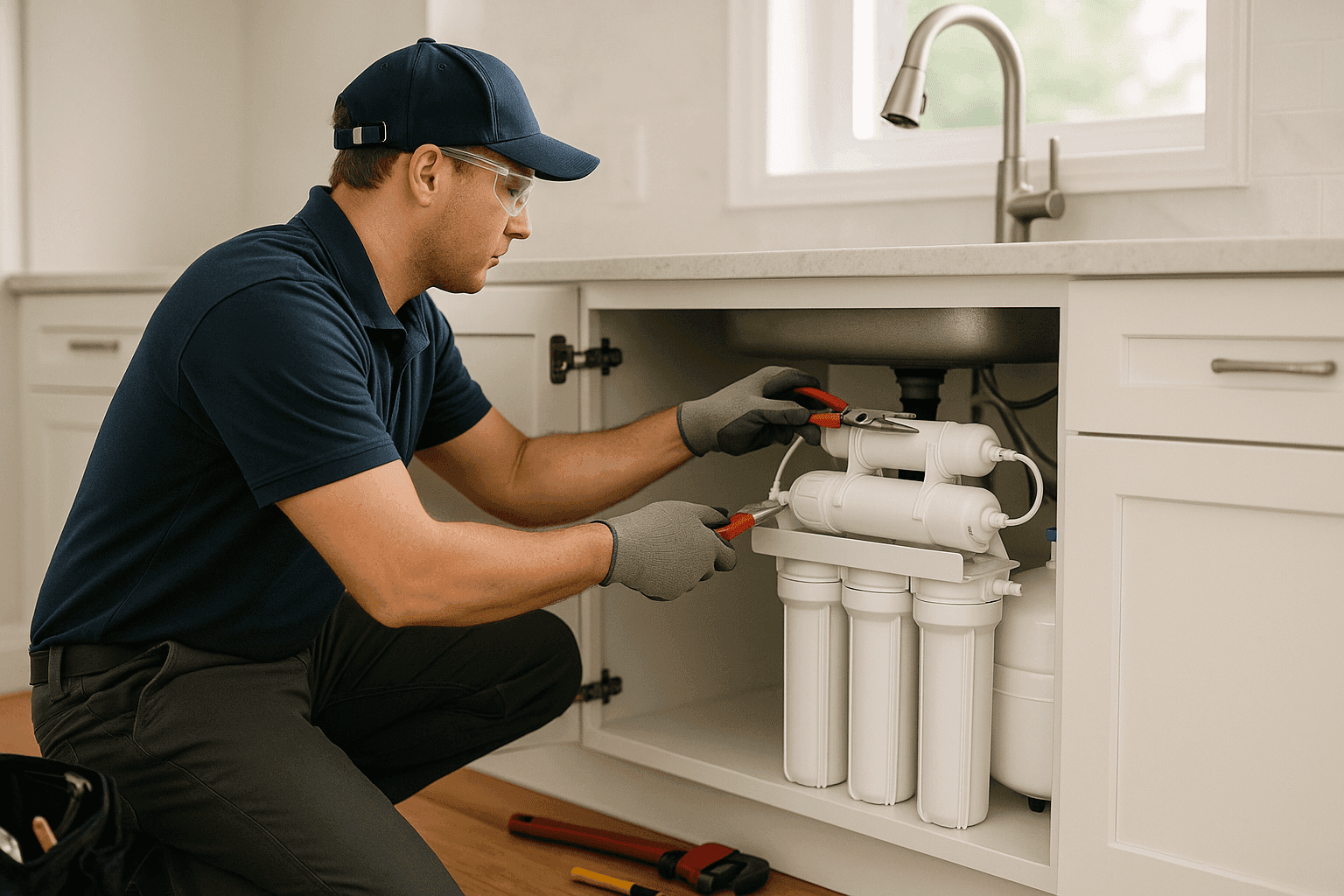
It’s tempting to tackle a water filter project yourself. Some systems, like pitcher filters or faucet attachments, are simple enough. But for whole-house or under-sink setups, things get trickier.
When DIY Makes Sense
- You’re installing a pitcher, countertop, or faucet-mounted filter.
- The system doesn’t require plumbing changes or electrical work.
When to Call Spicewood Plumbing
- You need to cut pipes or install shutoff valves.
- The system connects to your main water line.
- You want to ensure compliance with plumbing codes.
- You’re dealing with gas lines or electrical connections.
Professional installation helps prevent leaks, keeps your warranty valid, and ensures everything meets safety standards.
What Pros Do On Arrival
When a Spicewood Plumbing technician arrives, here’s what you can expect:
- Water Quality Assessment: Testing for contaminants, pressure, and flow.
- System Recommendation: Matching the right filter to your needs and budget.
- Safe Installation: Cutting, fitting, and securing pipes, valves, and filters.
- Code Compliance: Ensuring everything meets building and plumbing codes (referencing Uniform Plumbing Code and local regulations).
- System Testing: Checking for leaks, correct operation, and water quality after installation.
- Maintenance Tips: Showing you how to change filters and spot early warning signs.
Prevention & Maintenance
A water filtration system is only as good as its upkeep. Think of it like changing the oil in your car—skip it, and you’re asking for trouble.
Tips for Long-Lasting Performance
- Change filters on schedule. Mark your calendar or set reminders.
- Flush the system after filter changes. Keeps water fresh.
- Check for leaks regularly. Especially after heavy use or installation.
- Have annual inspections. Small issues can turn into big repairs if ignored.
The Water Quality Association recommends following manufacturer guidelines and scheduling periodic professional checkups.
Seasonal Maintenance
- Winter: Insulate pipes and filtration units in unheated spaces to prevent freezing.
- Heavy Use Periods: Check filters more often after holidays or busy seasons.
Costs & Time Factors
No two buildings—or budgets—are the same. Here’s what to expect:
- Pitcher or Faucet Filters: Low cost, quick installation (minutes).
- Under-Sink Systems: Moderate cost, installation in 1–2 hours.
- Whole-House Systems: Higher upfront cost, professional installation (several hours).
- Replacement Filters: Vary by type—factor in ongoing costs.
Remember, investing in filtration can extend the life of your plumbing and appliances, saving money down the road.
When It’s an Emergency
Sometimes, water issues can’t wait. If you notice:
- Sudden drop in water pressure
- Discolored or foul-smelling water
- Leaks around your filtration system
- Signs of flooding or water damage
Don’t hesitate—call for emergency plumbing help. Fast action protects your property and health.
FAQ
How often should I change my water filter?
Most filters need changing every 3–6 months, but always check your system’s manual. Some whole-house filters last longer, while high-use systems may need more frequent swaps.
Can water filtration systems remove all contaminants?
No single system removes everything. That’s why water testing is key. Sometimes a combination (like carbon plus UV) is best.
Is filtered water safe for pets and plants?
Yes, in most cases. But if you use reverse osmosis, add minerals back in for sensitive aquarium fish or plants.
Do I need a filtration system if I already have treated municipal water?
Even treated water can pick up contaminants from old pipes or infrastructure. Filtration improves taste, removes residual chemicals, and adds peace of mind.
Special Considerations for Water Filtration
- Business Use: Higher water demand may require larger or multiple systems.
- Sensitive Occupants: Infants, elderly, or those with health concerns benefit most from high-quality filtration.
- Building Age: Older pipes can leach metals—testing is vital.
- Backflow Prevention: Protects your system from contamination during pressure changes (required by many codes).
Ready to Improve Your Water?
Clean, safe water isn’t a luxury—it’s a necessity. Whether you’re upgrading an old system or starting fresh, Spicewood Plumbing can help you navigate the options and install a solution that fits your needs.
Call Spicewood Plumbing now — or reach us anytime at 877-834-5933 .